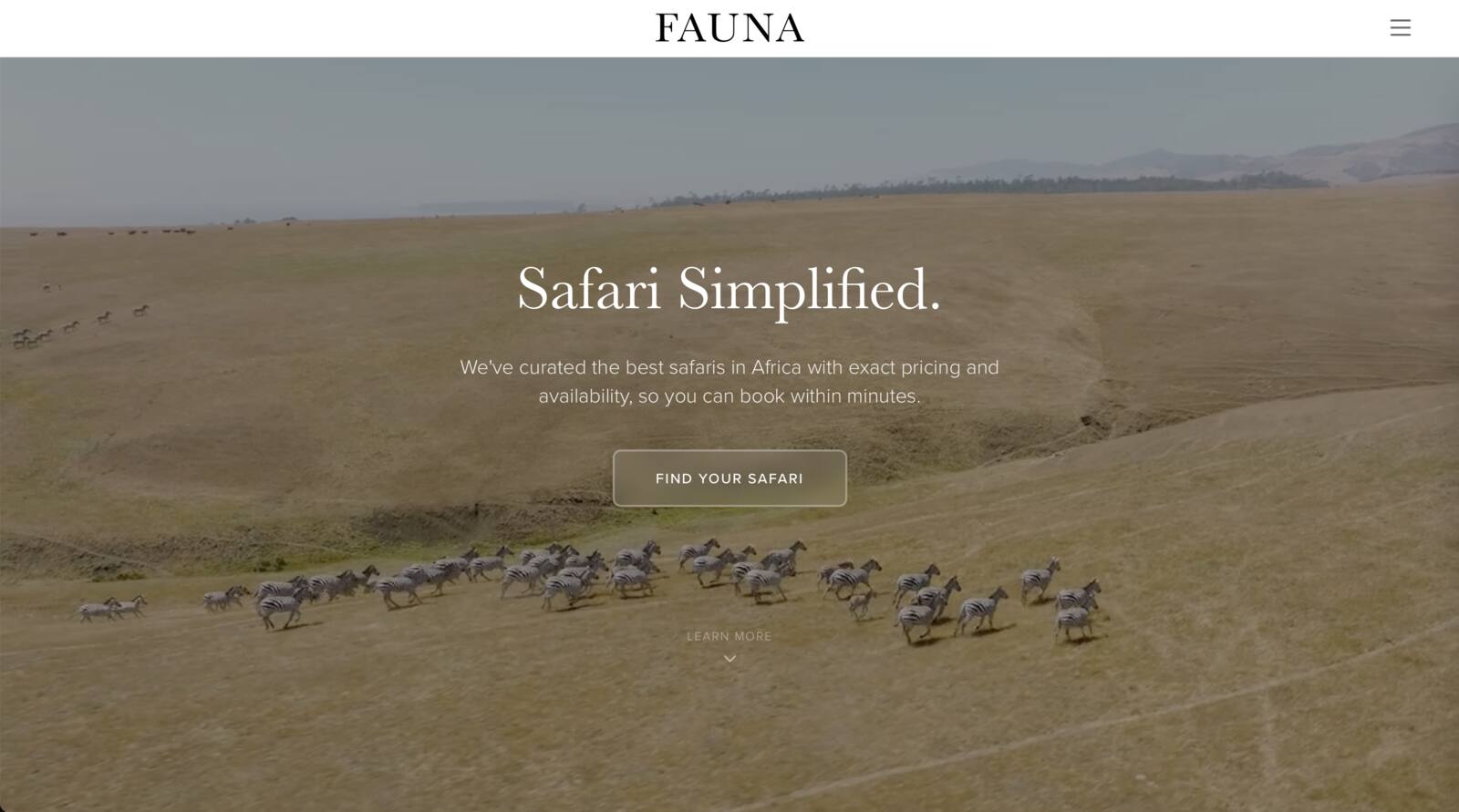
Fauna Travel is the wildlife travel agency I launched in 2023, focused on boutique luxury safaris in Africa. The first version of the site was built to earn trust through editorial content. In 2026 I rebuilt it from the ground up as a booking platform: live availability, exact all-in prices, and set-departure safaris you can book in minutes.
I made every product and design decision, and I built the platform myself with Claude Code — the booking flow, the pricing engine, the advisor back end, an AI assistant, and an MCP server for AI agents.
After four years of booking safaris, I realized our industry makes it more complicated than it needs to be. A custom safari usually means weeks of back-and-forth between the traveler, the advisor, and operators in Africa before anyone sees a final price.
But most great safaris follow common routes. If you know the parks and the lodges, they work a lot like cruises: a handful of proven itineraries, run on set dates.
I designed a set of itineraries I'm confident people will love, built around the best boutique luxury lodges. Then I paired them with live availability and exact pricing, so each trip shows an all-inclusive price per person up front, with real open dates.
The result is the new homepage promise: "Safari Simplified." A traveler can find a trip, see what's included and what it costs, and place a courtesy hold in minutes. I still plan custom trips, but they're no longer the only way in.
The platform went live in October 2026 with about 20 itineraries featuring more than 100 boutique and luxury lodges.
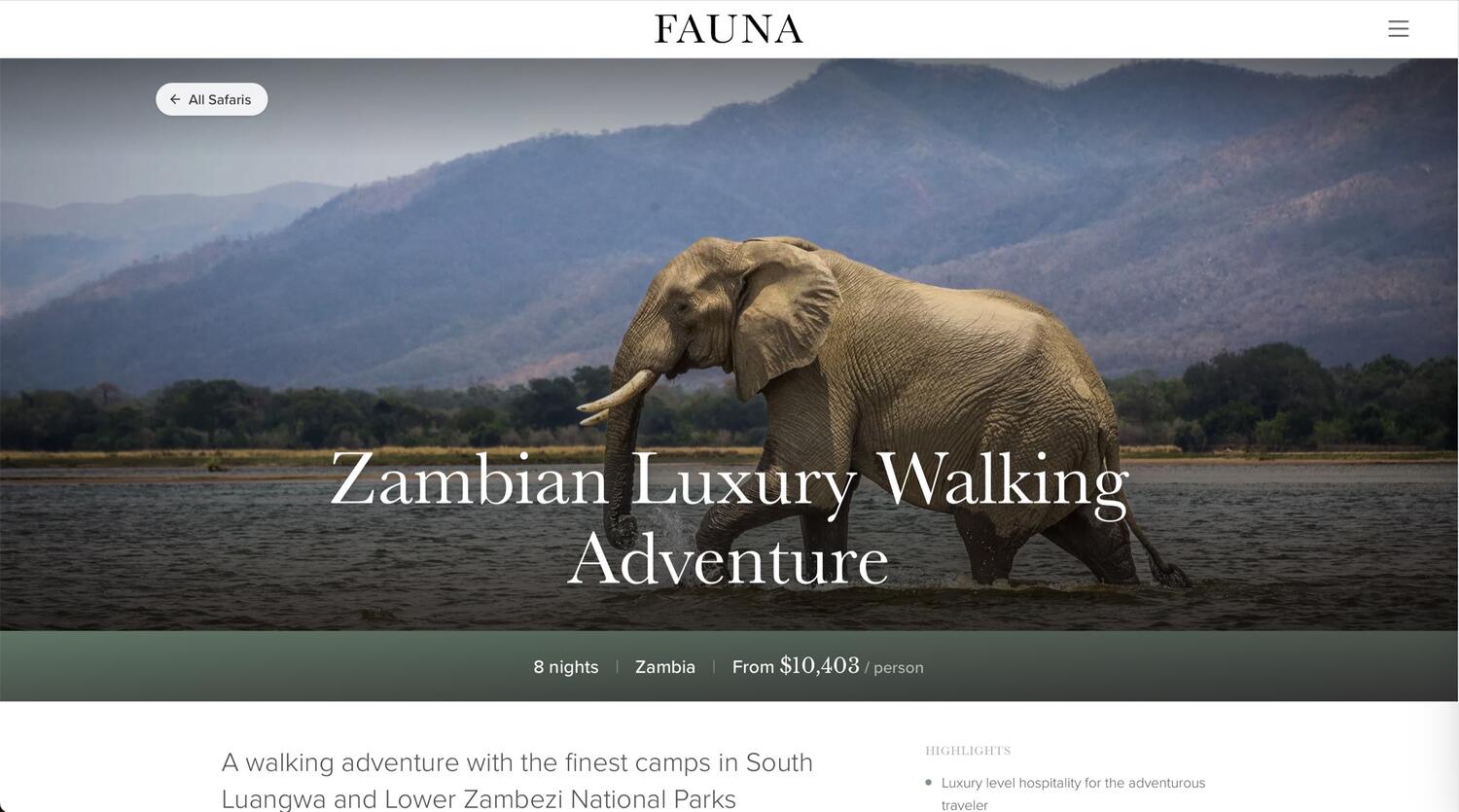
The same pricing rules run from the booking screen through checkout, itemized line by line:
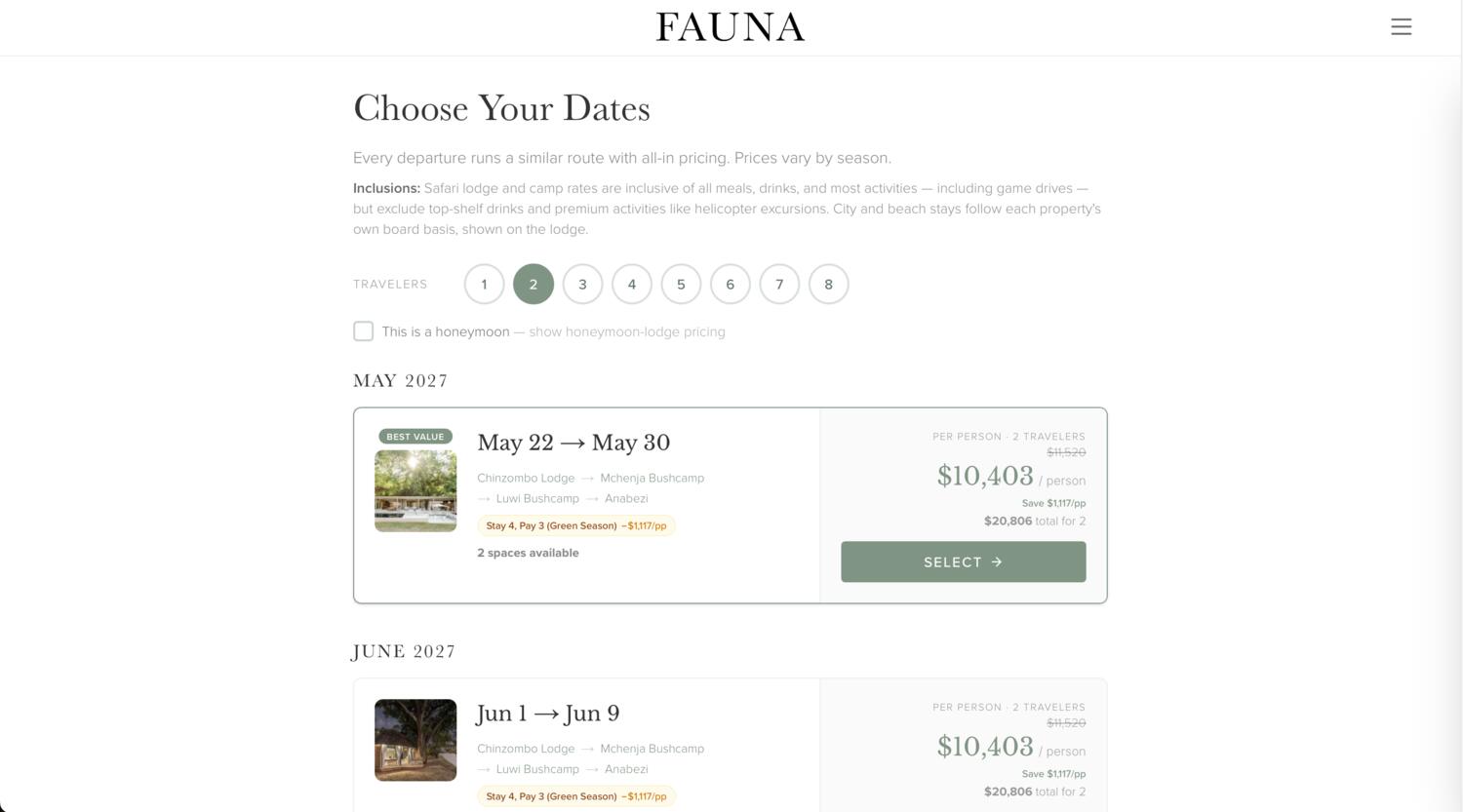
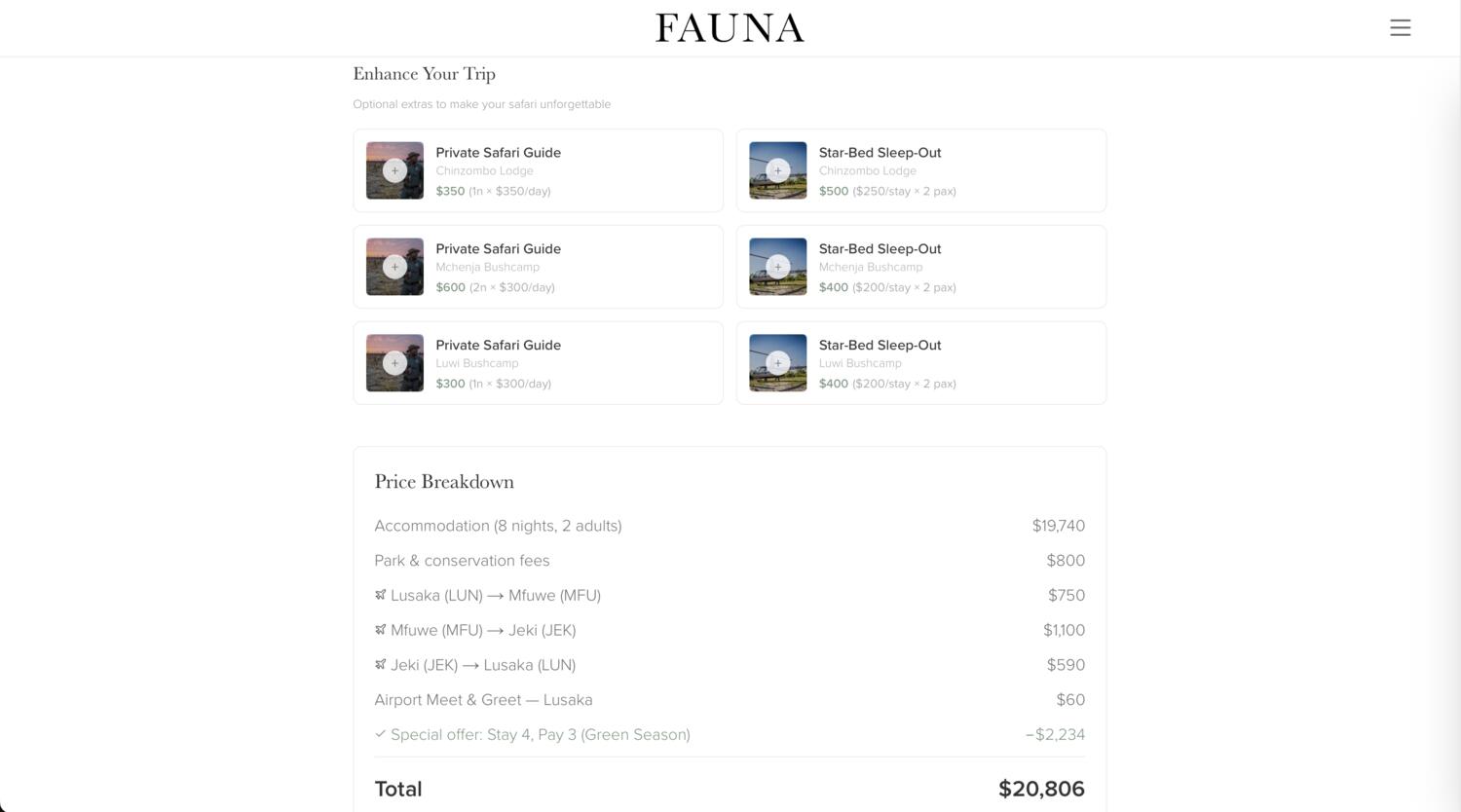
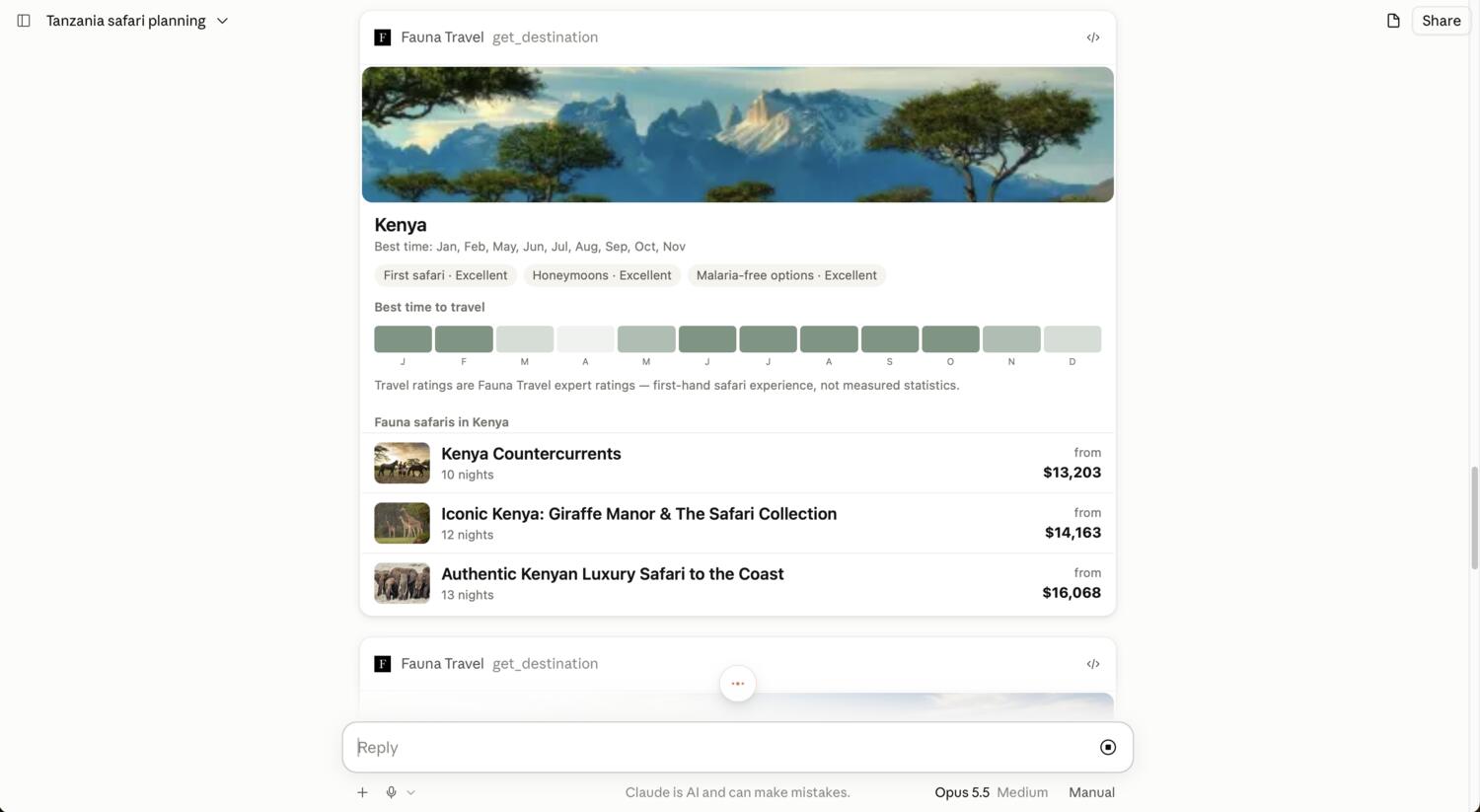
And because the data is exposed as an MCP server, an AI assistant can research a trip with live information and hand the traveler a booking link:
The same principles from the first version still lead: I'm a minimalist, every feature has to serve a function, and nothing should slow the traveler down or pressure them. The homepage still opens with a full-bleed image and one quiet call to action, "Find Your Safari."
What's new is a commitment to honest numbers:
The first version of the site — a custom WordPress theme I designed and coded from scratch — was built to earn trust through content rather than a hard sell. That work still carries the brand.
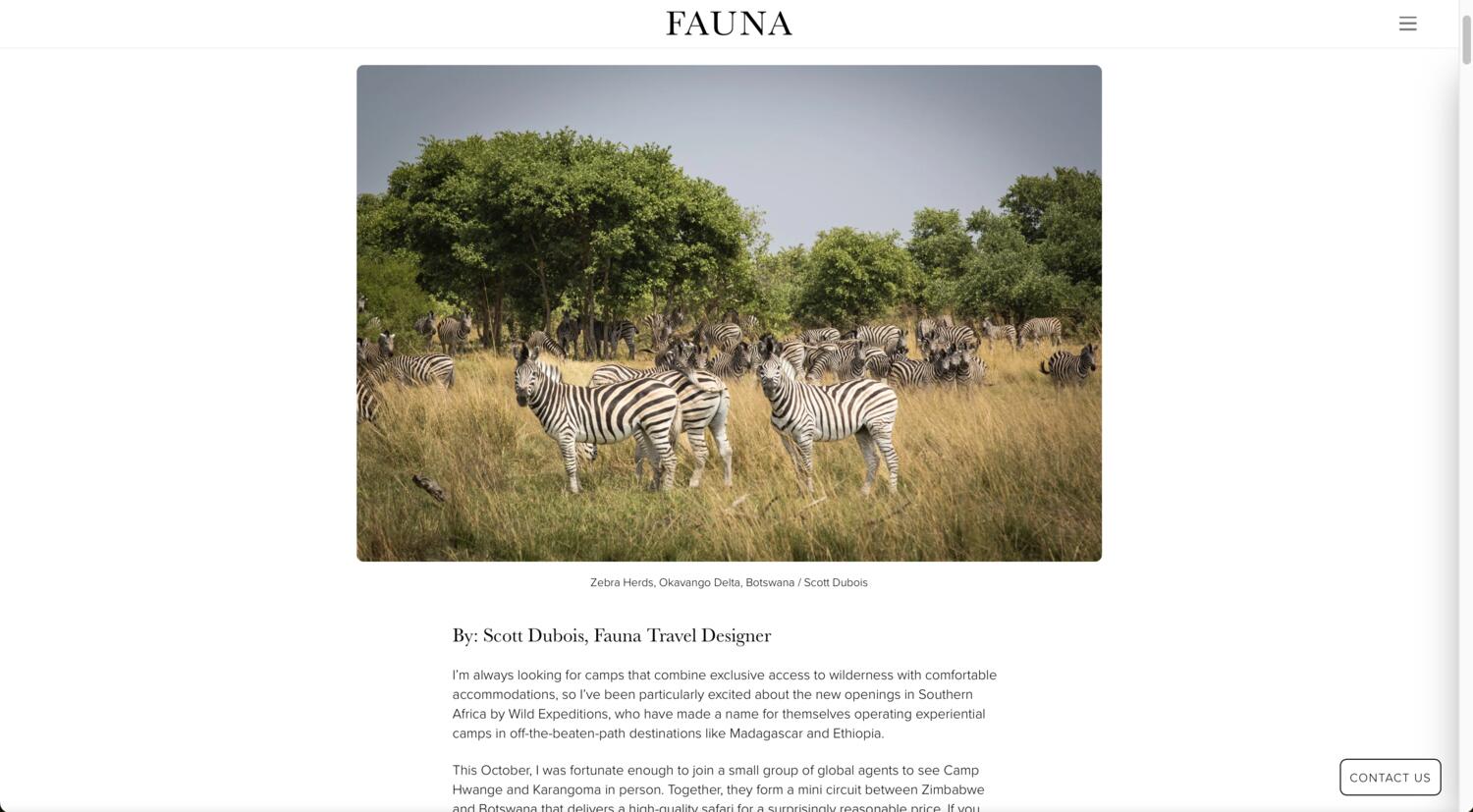
I keep the editorial voice elevated, straightforward, and slightly poetic, in a way that reflects my own personality with an emphasis on readability. Content is structured and informative to serve both SEO and the casual reader, while yielding depth to those who want to spend more time with it. It also aims to demystify the travel industry by giving insider tips that boost sales but are genuinely the best options out there.
The Fauna Journal includes dozens of travel articles I researched and wrote myself. I specifically targeted more content to walking safaris and countries like Zambia, where I knew the bigger safari companies weren't as active. Content ranges from standard listicles to a few long-form "Just Back From" stories:
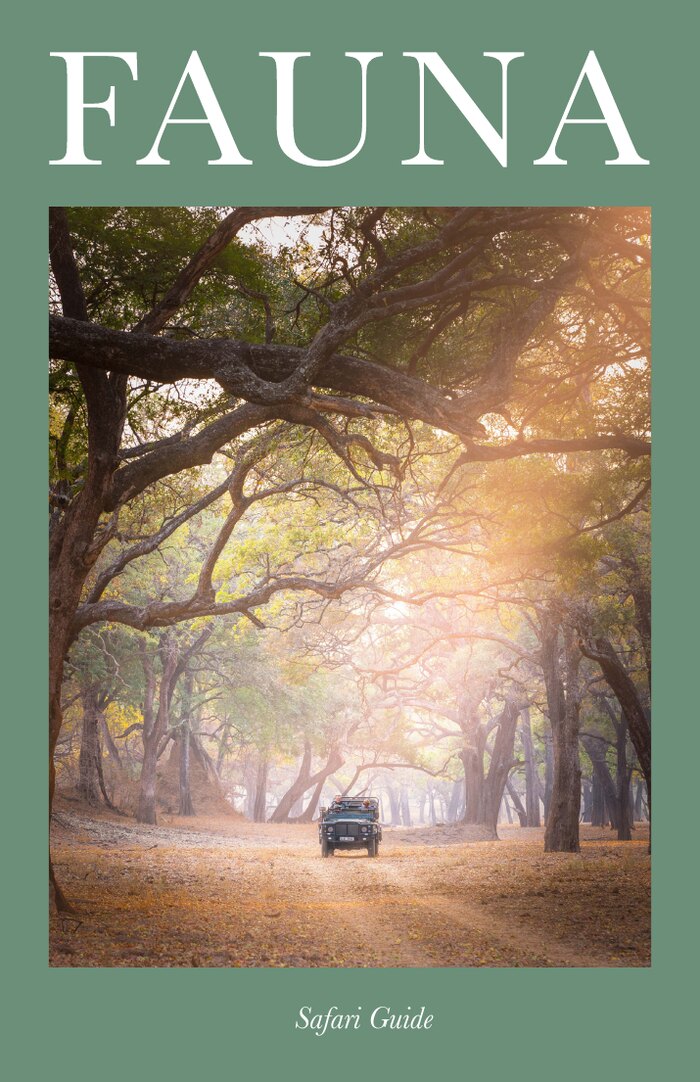
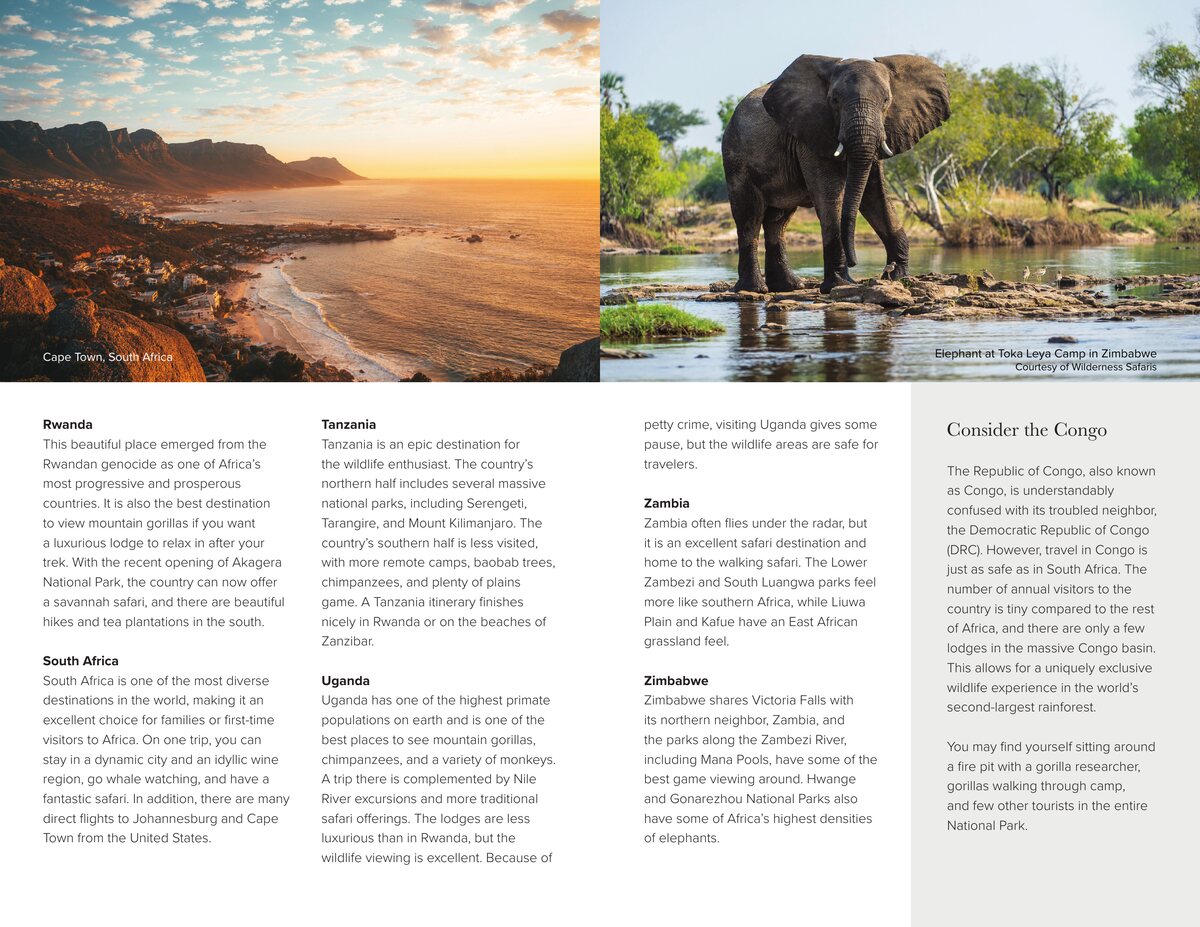
The content isn't only digital. I write and design a printed Safari Guide — a 13-page booklet that walks travelers through the regions, sample itineraries, and what to expect in the field. Same voice and restraint as the site, carried into print. Every page — writing, photography, layout, and cover — is mine, and the full guide is available to download as a PDF (15 MB).
The work reaches past my own clients, and I developed safari training materials for Fora. I also hosted biweekly safari training calls for other advisors — walking them through the destinations, camps, and on-the-ground logistics that make a trip actually work.
The editorial site taught me what travelers need before they'll trust an advisor with a five-figure trip, and its content still earns weekly leads from organic search. The new platform builds on that trust with something the industry rarely offers: a real price and real dates, up front. Many safari operators won't itemize a quote. I've even used the pricing engine to check a quote from an operator who wouldn't break it down, and it confirmed the deal was fair.